For healthcare leaders, payers, providers, government agencies, and assisted living operators serving medically complex populations, fragmented primary care carries a higher cost than many organizations realize. When diagnosis, management, follow-up, and continuity are split across disconnected settings and workflows, small gaps can become preventable crises. In this article, we explore the hidden cost of fragmentation and why home-based primary care offers a more connected model for high-risk patients.
When Care Is Available but Continuity Is Missing
For medically complex patients, the cost of fragmented primary care rarely begins with what appears on a claim. It starts earlier, in missed changes, delayed follow-up, medication confusion, avoidable escalation, and care plans that exist in pieces instead of as one continuously managed whole. In primary care, care coordination is not an optional extra. AHRQ defines it as the deliberate organization of patient care activities and the sharing of information among everyone involved so care is safer and more effective.
In these situations, the problem is a quality and safety problem. Communication breakdowns, medication-related problems, diagnostic issues, and fragmentation itself are among the major patient-safety threats in primary care. When the system is disconnected, patients do not merely experience delays. They face the greater risk that no one will catch the small issues before they become serious ones.
For medically complex patients, those risks multiply quickly. CMS’s guidance on complex chronic care management makes clear that these patients often require far more than routine follow-up. Their care may involve:
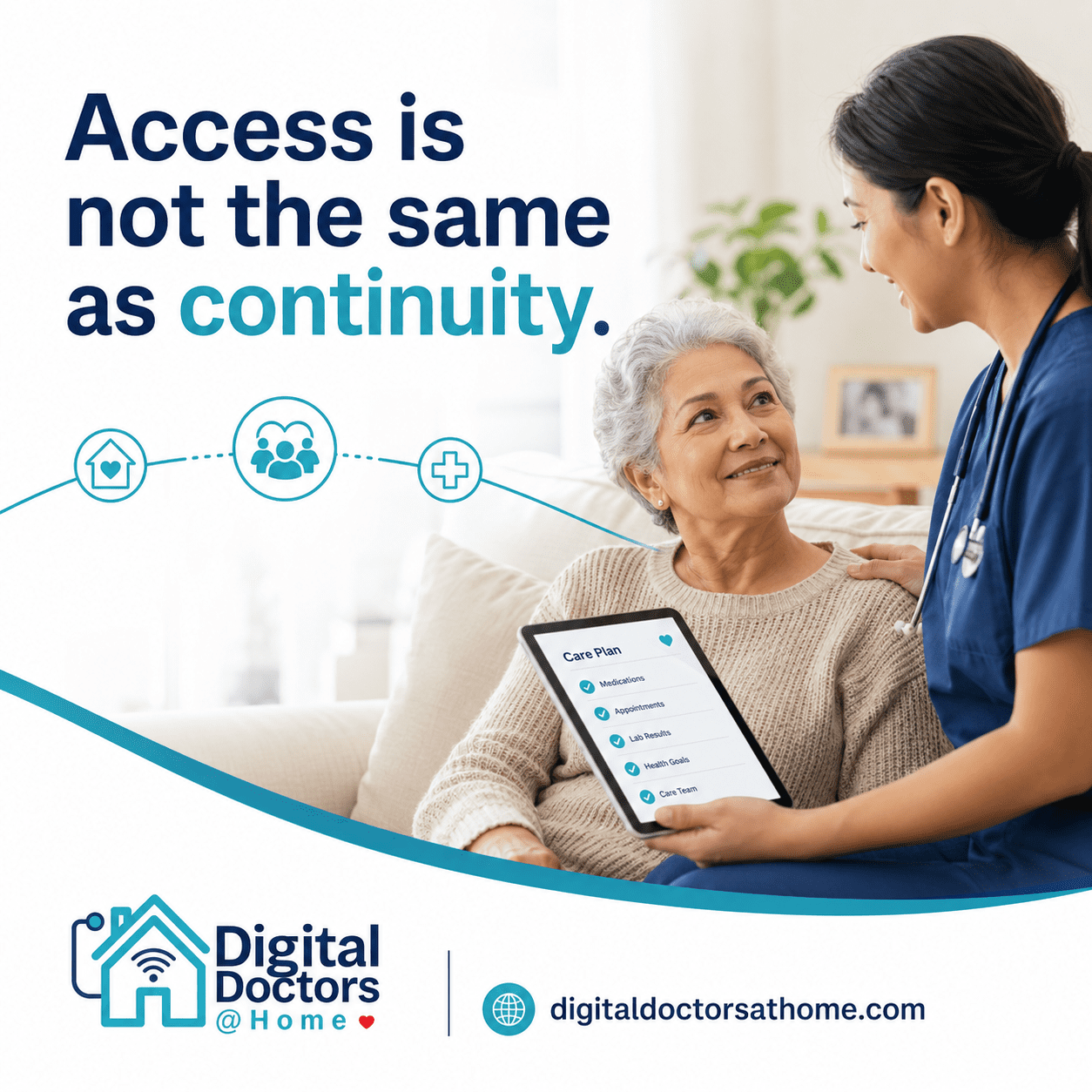
When those responsibilities are spread across disconnected settings and incomplete handoffs, complexity becomes vulnerability.
What Fragmented Primary Care Looks Like in Real Life
A patient sees one clinician for chronic disease management, another after hospitalization, and another specialist for a condition-specific issue. Family members or assisted living staff may notice subtle changes first, but the communication pathway is unclear. A medication is adjusted in one setting, but not fully communicated in the next. A follow-up visit happens without complete context. A care plan exists, but only in fragments.
For medically complex patients, those fragments matter.
Everyone is involved, but no one is truly managing the whole picture in a continuous way. That is exactly the kind of gap proper care coordination is meant to prevent through accountability, proactive care planning, monitoring, follow-up, and support during transitions.

They matter because medically complex patients are rarely managing one issue in isolation. Their care often includes multiple chronic conditions, changing medications, functional limitations, caregiver involvement, social barriers, and transitions between settings. When continuity breaks down, complexity becomes vulnerability.
Why Medically Complex Patients Are Hit the Hardest
The more medically complex a patient is, the more dangerous fragmentation becomes.
These patients often require ongoing assessment, medication oversight, follow-up after clinical changes, coordination with outside providers, and awareness of what is happening in the home environment. When no one owns that full picture, small issues can become large events.
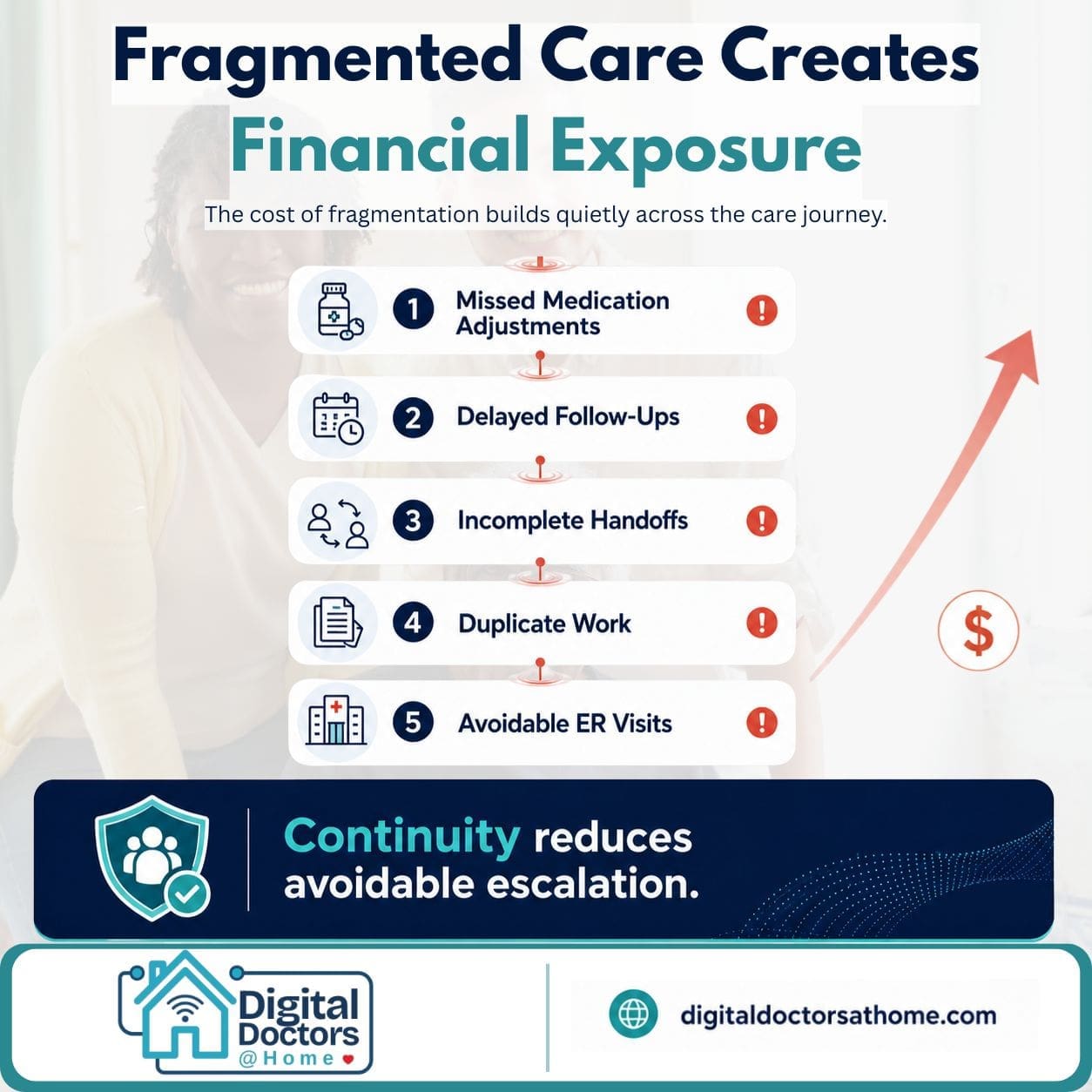
A missed medication adjustment can become a worsening condition. A delayed follow-up can become an emergency department visit. An incomplete handoff can become unnecessary duplication, confusion, or preventable decline.
The Clinical Cost of Fragmentation
The clinical cost of fragmented primary care is often paid in missed opportunities for early intervention.
Primary care plays a direct role in preventing medication-related harm, diagnostic delays, and avoidable escalation, but those protections weaken when care becomes episodic and disconnected across settings. A missed trend, a delayed callback, or an unclear next step can turn a manageable issue into an emergency. Medication-related problems, incomplete follow-up, delayed recognition of deterioration, and poorly coordinated care transitions all increase the risk of avoidable escalation.
The transition from hospital to home is one of the clearest examples. Nearly 20% of patients experience adverse events within 3 weeks of discharge, and many of those events are preventable or could be reduced in severity. Medication-related problems are especially common. For high-risk patients, discharge is not the end of instability. It is often the beginning of a period when the need for continuity becomes even more urgent.
The Operational Cost of Fragmentation
Fragmentation also creates an operational burden that is easy to underestimate.
Teams spend time chasing information, clarifying medication changes, reconstructing care plans, repeating histories, and trying to determine who is responsible for the next step. Instead of delivering proactive care, they are forced to compensate for gaps that should never have existed in the first place.
This kind of inefficiency creates a system that is less safe, effective and efficient for everyone involved, especially the patients.
The Financial Cost of Fragmentation
Avoidable emergency department visits, preventable hospital admissions, repeated assessments, duplicated communication, and delayed intervention all carry a financial impact.
Continuity is not a soft concept. It has measurable implications for cost, quality, and outcomes.
For organizations responsible for high-risk populations, fragmented primary care is a care delivery issue AND financial exposure.
The Human Cost of Fragmentation
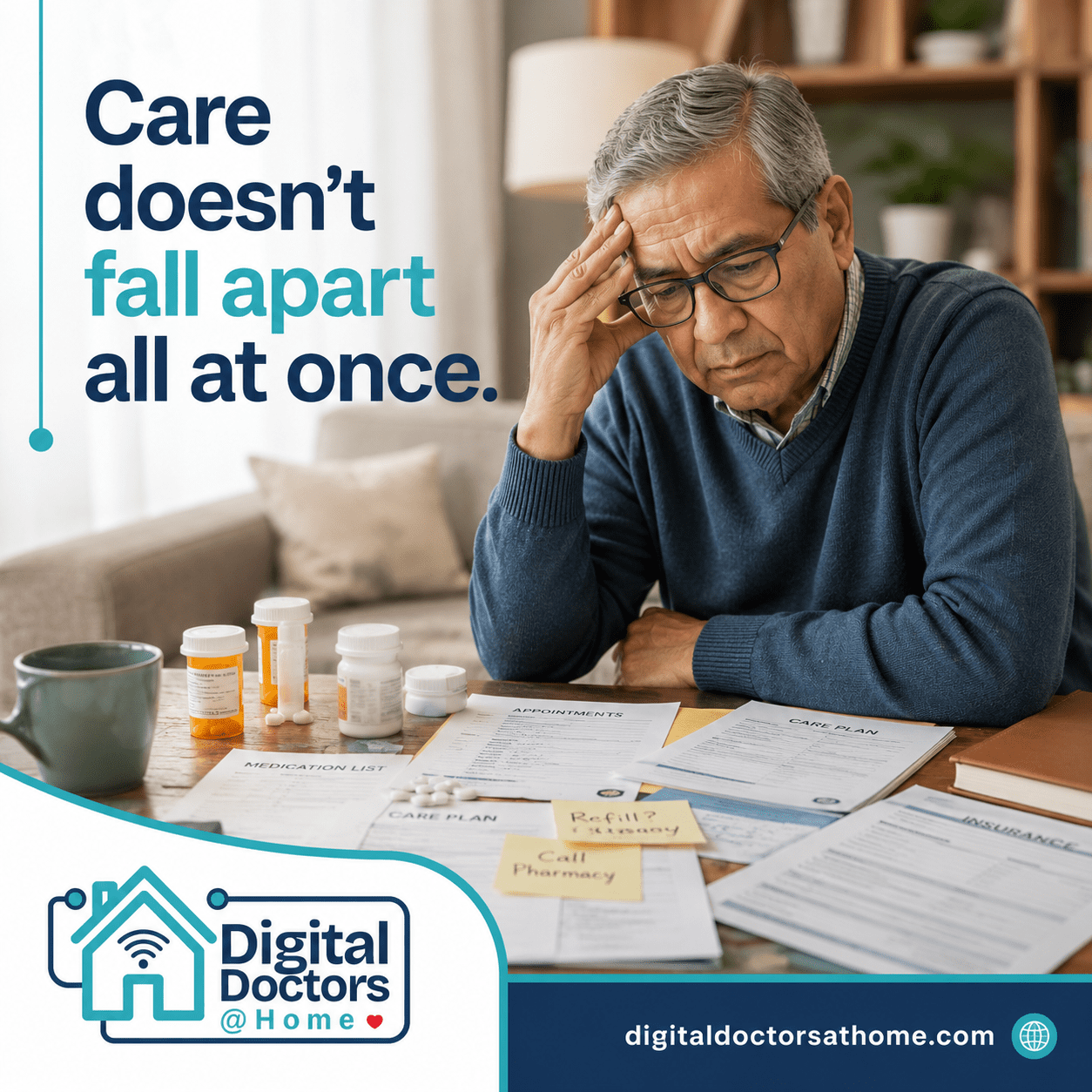
The human cost may be the most important of all.
When no one truly owns diagnosis, management, follow-up, and continuity, patients and families are often left carrying an unrealistic share of the coordination burden themselves. Remembering what changed, communicating between different providers, and clarifying medication plans, is especially heavy for older adults, patients with multiple chronic conditions and those moving between home, hospital, specialists and assisted living settings.
What looks like a systems issue on paper often feels very personal in real life.
For operators and care networks, CHWs represent a scalable, cost-effective layer of continuous oversight that complements remote monitoring and clinical review—without adding burden to existing staff.
Better Outcomes Require More Than Access
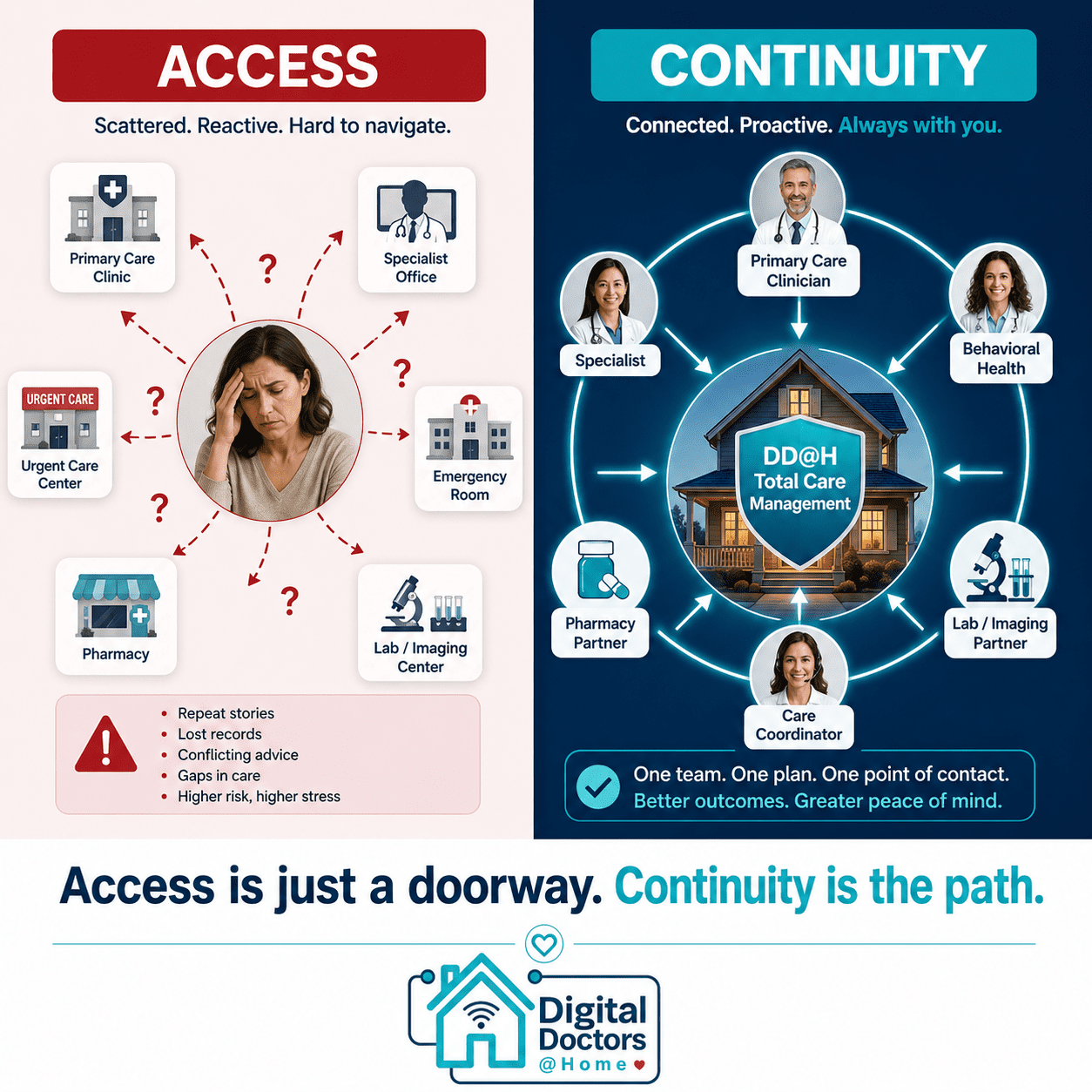
For medically complex patients, more access, touchpoints, technology, and services do not automatically create better care.
Better outcomes require a primary care model that owns the full picture. That means clear responsibility for diagnosis and management, timely follow-up, coordination across settings, visibility into changes, and a care plan that remains current as the patient’s condition evolves.
Without that structure, patients may have access to care without experiencing continuity of care.
Why Home-Based Primary Care Matters
This is where home-based primary care becomes especially relevant.
Home-based primary care is not home health care, and it is not home care. It is primary care delivered by clinicians such as physicians, nurse practitioners, and physician assistants who diagnose, manage conditions, and make care decisions. That distinction matters because medically complex patients often need more than supportive services or episodic skilled visits. They need ongoing clinical ownership.
A strong home-based primary care model brings diagnosis, management, follow-up, and care-plan adjustment closer to where patients actually live and where deterioration often begins. It creates greater visibility into what is happening between visits and across settings. It supports earlier recognition of change, clearer accountability, and more connected decision-making.
DigitalDoctors@Home approaches this challenge through a home-based primary care model designed to bring greater continuity, clinical oversight, and coordination into the patient’s everyday environment. Through its Total Care Management approach, DD@H combines a Patient Care Center with a high-touch clinical team to support earlier visibility, more connected follow-up, and more proactive management for medically complex patients. The aim is to reduce fragmentation before it leads to avoidable escalation, helping prevent unnecessary emergency department visits and hospital admissions through more continuous, home-based primary care.
The Leadership Takeaway
For healthcare leaders, payers, providers, government agencies, and assisted living operators, the takeaway is straightforward.
The hidden cost of fragmented primary care shows up in missed deterioration, unclear follow-up, medication confusion, duplicate effort, and patients whose care is technically available but operationally disconnected. Better outcomes for medically complex patients require more than access. They require accountability, continuity, and a primary care model designed to own the whole picture.
That is the real opportunity in home-based primary care.
Learn More
At DigitalDoctors@Home, home-based primary care is designed to reduce fragmentation, strengthen continuity, and better support medically complex patients where health is actually lived.
For healthcare leaders, payers, providers, government agencies, and assisted living operators serving high-risk populations, the opportunity is clear: better outcomes require more than access. They require a more connected model of care.
Contact DD@H at contactus@digitaldoctorsathome.com or (713)447-4276 to learn how home-based primary care can help your organization better support medically complex patients.


