Summary- Remote Patient Monitoring (RPM) is one of the most talked-about and misunderstood tools in home-based care.
For seniors and medically complex patients, RPM is often described as a way to “keep an eye on health at home.” In practice, however, outcomes depend far less on the devices themselves and far more on how monitoring is integrated into a broader care model.
This article explains what remote patient monitoring actually is, who benefits most, and why RPM works best when it’s paired with clinical oversight and coordinated care, not when it's used on its own.
What is Remote Patient Monitoring (RPM)?
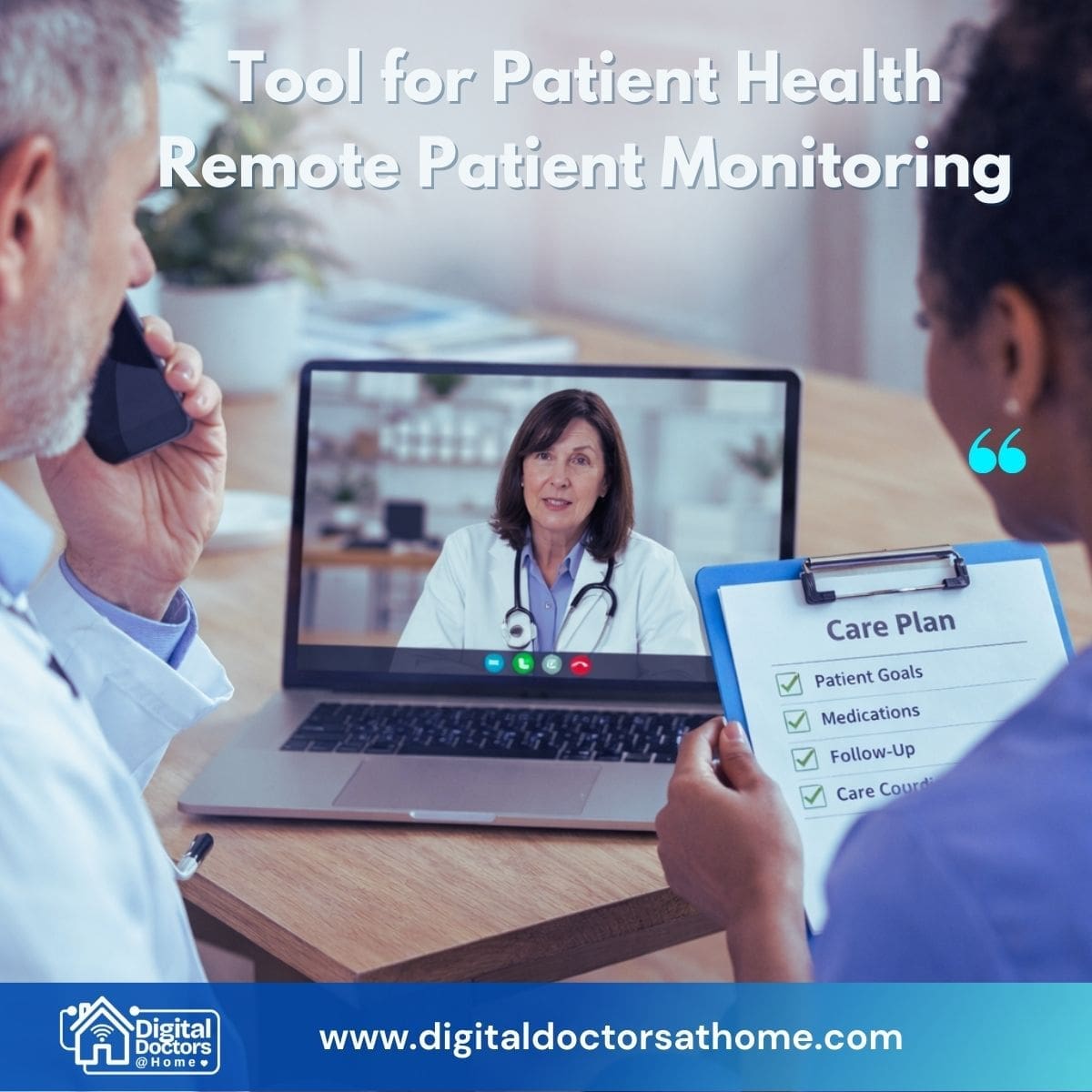
Remote Patient Monitoring refers to the ongoing collection of health data from patients in their home and the electronic transmission of that data to a care team for review.
Depending on the patient’s needs, RPM may involve tracking:
- Blood pressure
- Heart rate
- Blood glucose
- Oxygen saturation
- Weight or other condition-specific indicators
The purpose of RPM is not to replace clinical visits or diagnose emergencies. Its role is to provide visibility between visits to help care teams detect changes earlier than they otherwise would.
At its best, RPM supports proactive care by identifying trends that suggest risk before those changes escalate into urgent situations.
What RPM Is & What It Isn't
Remote patient monitoring is a tool that:
- Helps establish a baseline of a patient’s health at home
- Tracks changes over time, not just one-off readings
- Supports earlier outreach and follow-up
- Adds context to clinical decision-making
Many times, RPM is often misunderstood as a standalone solution.
The truth is that RPM is not a replacement for clinicians, an emergency response system, or a “set it and forget it” device program. It is ineffective without human review and follow-through.
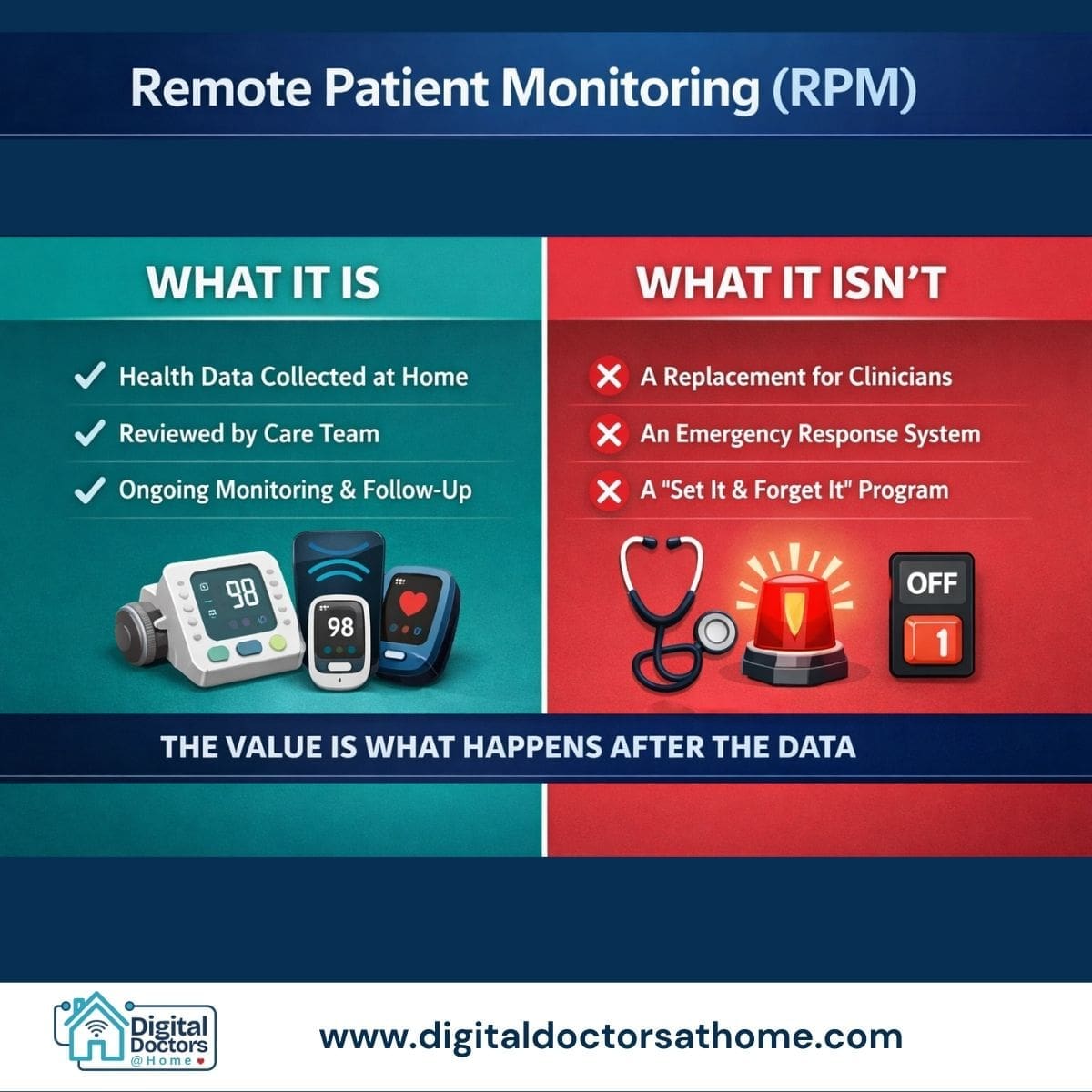
We know that data alone does not improve outcomes: it’s what happens after a signal appears that matters.
Who Benefits Most from Remote Patient monitoring At Home?
RPM is not appropriate for every patient, and is most effective when used thoughtfully with populations that benefit from ongoing visibility and structured follow-up.
-
Seniors with multiple chronic conditions
Patients managing conditions such as hypertension, diabetes, heart failure, or COPD often experience gradual changes before acute events. RPM helps care teams notice patterns that may otherwise go undetected.
-
Patients recently discharged from the hospital
The weeks following discharge are a vulnerable period. Monitoring during recovery can support earlier intervention if symptoms worsen or recovery stalls.
-
Assisted living residents needing additional clinical visibility
In assisted living settings, staff often notice subtle changes first—but may lack a clear clinical pathway for escalation. RPM can support earlier review when paired with care coordination and defined response protocols.
How RPM Supports Proactive Care (When Used Correctly)
Effective RPM programs focus less on single readings and more on trends over time.
A proactive approach typically follows this sequence:
Step 1 -Establish a baseline
Step 2 - Monitor for meaningful change
Step 3 -Identify signals that suggest rising risk
Step 4 -Initiate timely outreach or intervention
Remote Patient Monitoring works best when there are clearly assigned roles for the person(s) responsible for reviewing incoming data,interpreting trends in context, and coordinating next steps.
Without those elements, monitoring quickly becomes noise, or worse, a false sense of security.

Remote Patient Monitoring Alone Isn’t Enough
Many RPM initiatives have struggled to get meaningful results, but it’s not because the technology is faulty, but because the surrounding system is incomplete.

If these questions aren’t clearly defined, then Remote Patient Monitoring cannot reliably prevent escalation.
How DigitalDoctors@Home Uses RPM as Part of a Care System

At DigitalDoctors@Home, remote patient monitoring is used as one component of a broader care workflow, not a standalone program.
RPM data feeds into a coordinated model that includes:
- Clinical review and interpretation
- Virtual care and proactive outreach
- Clear escalation pathways
- Ongoing care coordination
Monitoring supports, not replaces, clinical judgment. Insights are reviewed by care teams who determine when follow-up is needed and how best to intervene.
This approach allows RPM to contribute meaningfully to chronic care management and transitional care, where early detection and follow-through are critical.
How RPM, Telehealth & Chronic Care Management Work Together
RPM is often confused with telehealth or chronic care management. Each plays a different role. Telehealth involves scheduled or on-demand encounters, while Remote Patient Monitoring provides ongoing data between encounters RPM enhances telehealth by giving clinicians more context before and after visits.
Chronic Care Management (CCM) provides the framework of care, e.g., care plans, outreach, and coordination. Remote Patient Monitoring enhances CCM by improving visibility between touchpoints. Together, they support continuity of care beyond episodic visits.
Frequently Asked Questions
No. Staff observations are often the first signal. RPM adds clinical context and follow-through.
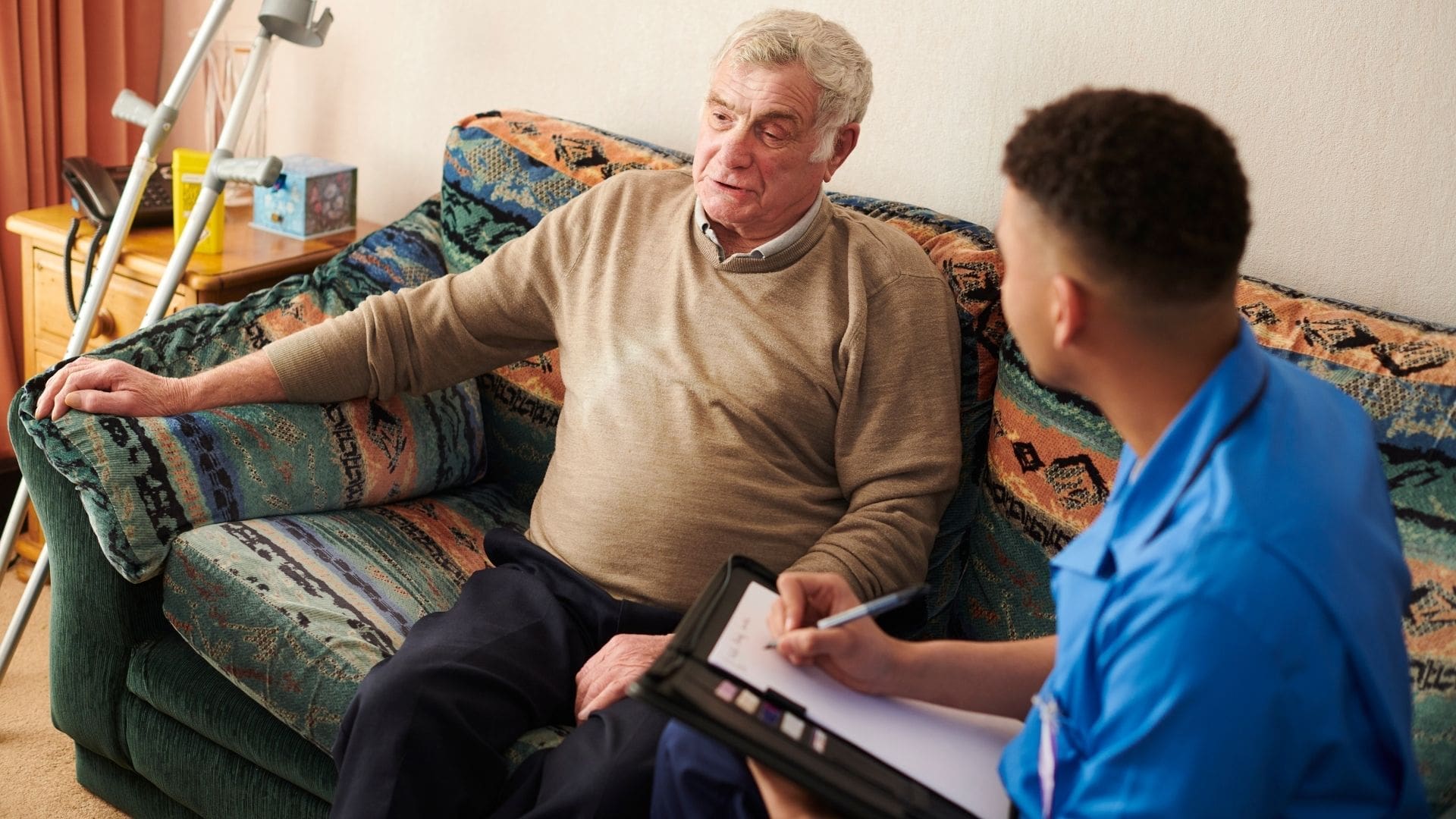
The Bottom Line: RPM Works Best as Part of a Proactive Care Model
Remote patient monitoring can be a powerful tool when it is embedded in a system that supports interpretation, coordination, and timely response.
Used correctly, RPM helps care teams see risk earlier, act before escalation and most importantly, support patients where they live.
Used alone, it becomes just another data stream. The difference for patient well being is not based solely on the device, but on the care model around it.
Learn More
To see how DigitalDoctors@Home integrates remote patient monitoring into a coordinated, home-based care model designed to support patients between visits, click here to learn more.


